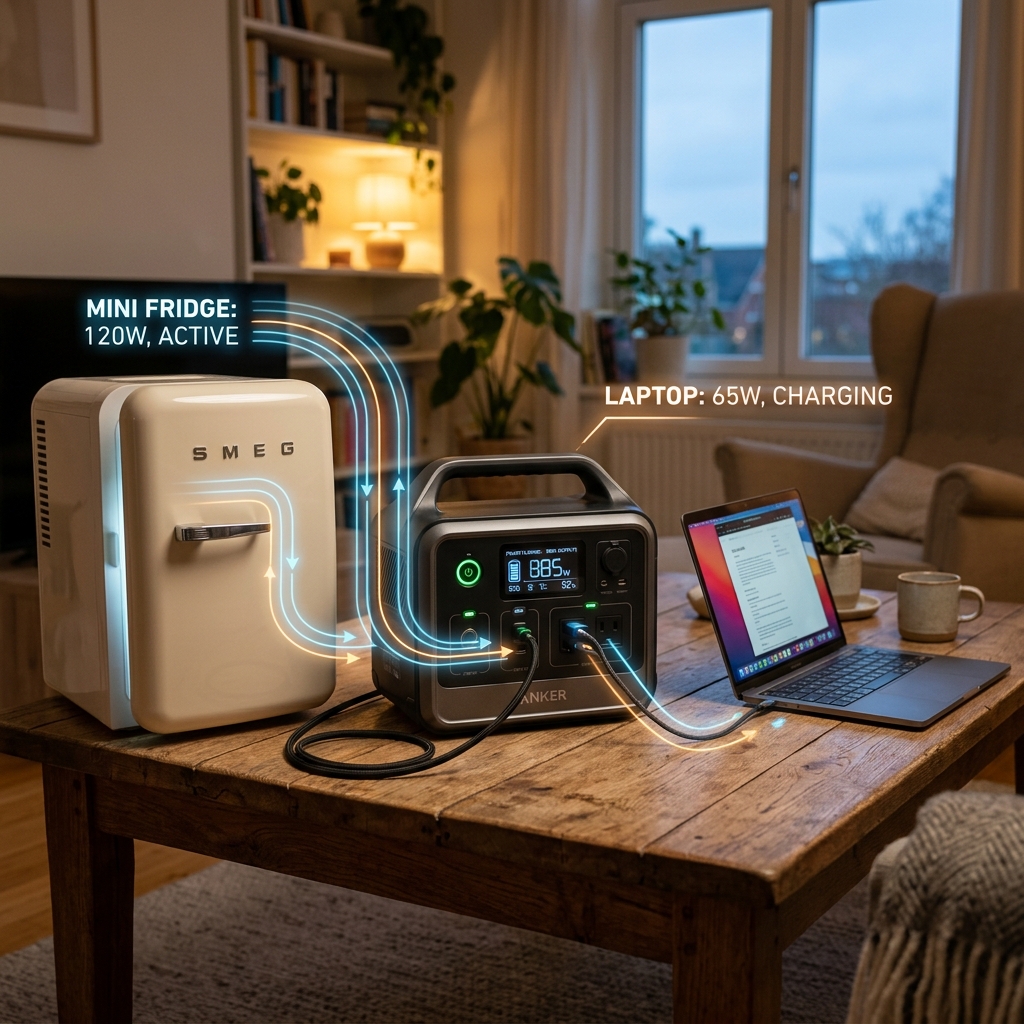
Direct answer: A quick framework for balancing price, watt-hours, output, and portability when comparing models.
Editorial note: WhichWatts is an independent comparison site. Prices, availability, specifications, and retailer promotions change frequently. Check the live product table and retailer page before buying.
Compare Portable Power Stations by Price and Capacity
Price and capacity answer different parts of the buying question. Capacity describes how much energy a battery can store, while inverter output describes the load it can power at one time. The DOE’s solar and storage basics uses the same capacity-versus-power distinction for energy storage systems.
Compare in the right order
- List the devices you need to run and their running watts, startup surge, and hours of use.
- Estimate daily watt-hours, then add a reserve for conversion losses, temperature, and uncertainty.
- Filter for enough continuous and peak output before comparing prices.
- Use cost per Wh to shortlist the remaining models, while noting that advertised capacity is not the same as AC energy delivered.
- Check weight, dimensions, recharge time, solar input, battery chemistry, expansion, and warranty.
A larger station may have a lower cost per Wh but be inconvenient to carry or impossible to recharge during your trip. A compact station may cost more per Wh while being the better fit for phones, lights, and a laptop.
The product comparison tool lets you put shortlisted models next to each other instead of relying on a single score. Confirm the current regional price, bundle contents, and exact manufacturer specification before buying.