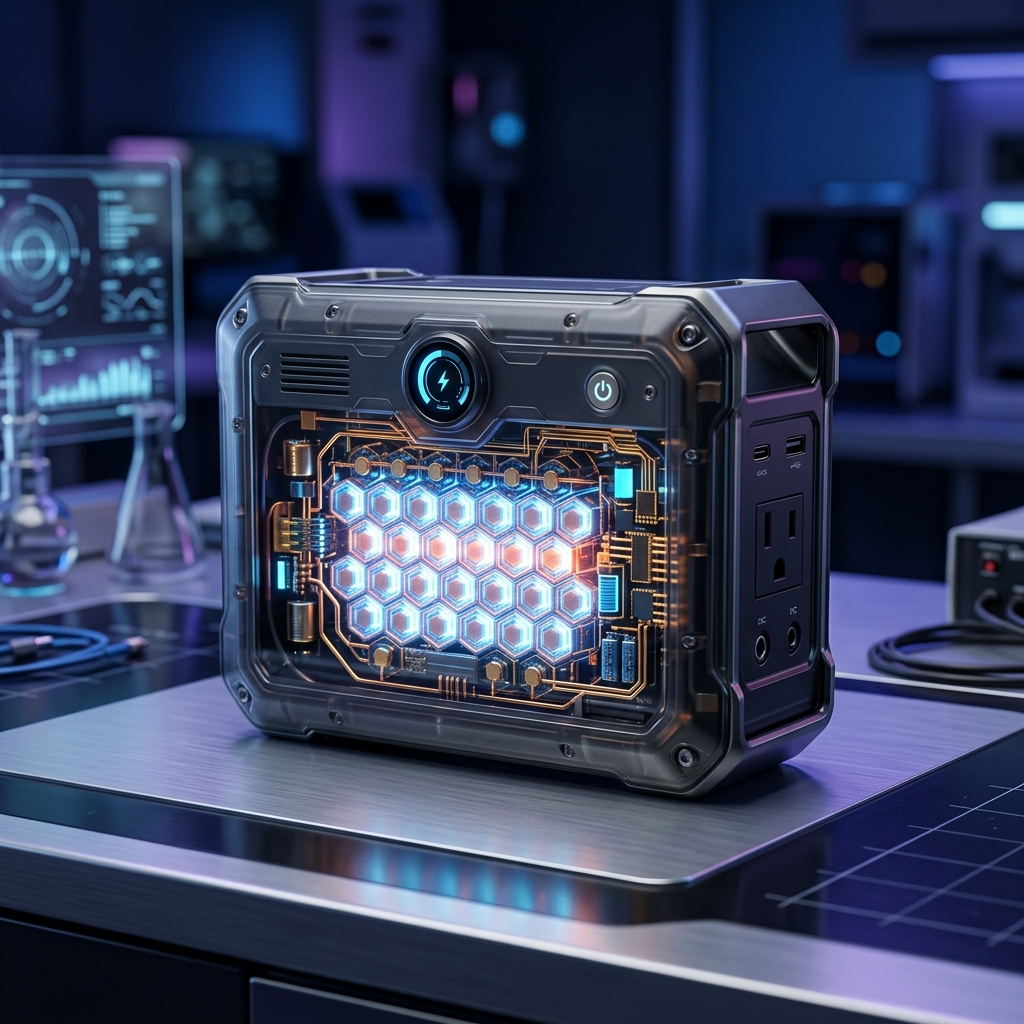
Direct answer: Solid-state batteries promise to be lighter, safer, and more energy-dense than LiFePO4. But when will they actually arrive in mainstream portable power stations?
For the past few years, LiFePO4 (Lithium Iron Phosphate) has been the undisputed king of portable power station batteries. It's safe, long-lasting, and reliable. However, it's also incredibly heavy.
Enter the holy grail of battery technology: Solid-State Batteries.
As we move deeper into 2026, manufacturers are racing to bring solid-state power stations to the mainstream market. But what exactly are they, and should you wait to buy one?
What is a Solid-State Battery?
Traditional lithium-ion and LiFePO4 batteries use a liquid or polymer gel electrolyte to move ions back and forth between the anode and cathode. This liquid adds weight, takes up space, and is the primary reason why damaged batteries can catch fire.
A solid-state battery replaces that liquid with a solid material (like ceramics, glass, or solid polymers).
The Three Massive Advantages
- Incredible Energy Density: Solid-state batteries can hold significantly more power in the same physical footprint. A 2,000Wh power station could potentially shrink to half its current size and weight.
- Ultimate Safety: Because there is no flammable liquid electrolyte, solid-state batteries are practically fireproof. You can puncture them, crush them, or overheat them without risking a thermal runaway event.
- Faster Charging: The solid electrolyte allows for much faster movement of ions without generating excessive heat, meaning charging times could be slashed dramatically.
Are We There Yet?
Yes and no.
In late 2024 and 2025, we saw the first "semi-solid" state batteries hit the market from pioneering brands like Yoshino. These were impressive, but incredibly expensive.
As of 2026, the technology is rapidly scaling up, but we are still in the premium early-adopter phase. True solid-state batteries are notoriously difficult to manufacture at scale.
Should You Wait to Buy?
If you need a power station right now for home backup or a camping trip next month, do not wait.
Current LiFePO4 power stations from brands like EcoFlow, Bluetti, and Anker are mature, highly reliable, and far more affordable than they were three years ago. A good LiFePO4 station will last you 10+ years anyway.
However, if you are planning a massive off-grid van build for next year and weight is your absolute biggest constraint, it might be worth keeping a close eye on the late-2026 product roadmaps from major manufacturers.