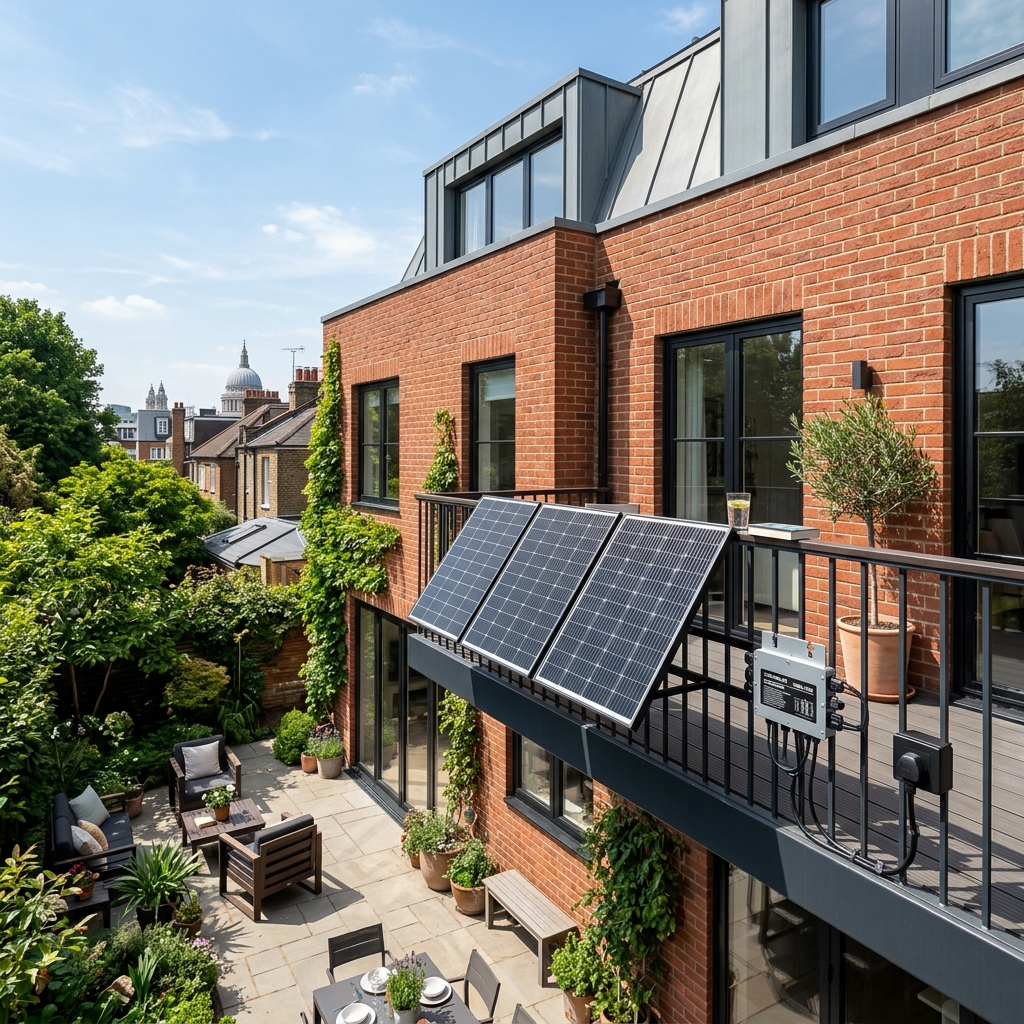
Direct answer: Should you install a grid-tied plug-in solar kit or connect solar panels to a portable power station? We compare efficiency, legality, emergency outage capability, and payback period for UK households.
When UK households explore affordable solar energy solutions, they usually run into two distinct approaches:
- Grid-Tied Plug-In Solar Kits (Balcony solar microinverters that feed electricity directly into household wall sockets).
- Off-Grid Portable Power Stations (Solar panels connected to a portable battery generator like an EcoFlow DELTA or Bluetti AC200 MAX).
While both setups lower electricity bills and utilize solar panels, they function fundamentally differently — especially during a power cut. This guide compares both options across legality, emergency power capability, efficiency, and overall payback period.
The Critical Difference: What Happens During a Power Cut?
The most common misconception UK buyers have regarding grid-tied plug-in solar is assuming it will keep their fridge or lights running during a power outage.
Grid-Tied Plug-In Solar: Shuts Down Instantly
Under UK DNO G98 regulations, microinverters must disengage within 20 milliseconds of a grid power loss (anti-islanding safety). If the grid goes down, your plug-in solar kit stops generating power immediately — even if the sun is shining brightly outside.
Portable Power Stations: Uninterruptible Emergency Power (UPS)
A portable power station operates as an independent, off-grid energy reservoir. Solar panels charge the battery directly via DC input. When the grid fails:
- The power station continues to supply 230V AC power to plugged-in appliances.
- Models with EPS/UPS functions switch over automatically in under 20ms, protecting computers, fridges, and broadband routers.
Detailed Feature Comparison
| Feature | Grid-Tied Plug-In Solar Kit | Portable Power Station + Solar Panels | Hybrid Plug-In Solar + Storage |
|---|---|---|---|
| Primary Goal | Daily electricity bill reduction | Outage backup & outdoor/camping portability | Bill reduction + Emergency power |
| Grid Connection | Grid-tied (Feeds 13A socket) | Standalone (Off-grid DC charging) | Dual mode (Grid feed + battery backup) |
| G98 DNO Notice Required? | Yes (Submit within 28 days) | No (Completely off-grid) | Yes (For grid feed aspect) |
| Power Cut Protection | ❌ No (Cuts off for safety) | ✅ Yes (Full battery power available) | ✅ Yes (If unit has EPS AC output) |
| Portability | Fixed or semi-permanent | Highly portable | Semi-portable |
| Typical Cost | £350 – £700 | £500 – £1,800 | £900 – £2,200 |
Option 1: Grid-Tied Plug-In Solar (Best for Maximum Bill Savings)
If your primary objective is reducing your monthly electricity bills with minimal upfront cost, a standard grid-tied plug-in kit is ideal.
- How it works: Panels convert sunlight to DC → Microinverter converts DC to 230V AC → Power feeds straight into your home circuit via wall socket.
- Pros: Lowest cost per watt generated, lightweight, passive bill reduction every sunny day.
- Cons: Zero power during grid blackouts, excess unused energy goes to grid uncompensated unless paired with smart export meter.
Option 2: Portable Power Station + Solar (Best for Emergency Preparedness & Camping)
If your main priority is peace of mind during storm blackouts, van life, or outdoor travel, an off-grid portable power station setup is superior.
- How it works: Portable solar panels (MC4/XT60) plug directly into the power station's MPPT solar controller → Battery charges safely → Appliances plug into the power station's 230V UK sockets.
- Pros: Works 100% off-grid, 0% reliance on DNO permission, powers fridges and medical gear during outages, take it camping or in an RV.
- Cons: Higher initial cost per kWh stored compared to bare microinverters.
Option 3: The Ultimate Hybrid System (EcoFlow PowerStream / Anker Solix)
In 2026, leading manufacturers have bridged the gap by creating Hybrid Balcony Energy Storage Systems.
Systems like the EcoFlow PowerStream or Anker Solix Solarbank allow you to:
- Feed daytime solar into your household sockets to slash daily electric bills.
- Store excess solar energy inside a portable power station.
- Unplug the portable power station during a blackout or camping trip to use as a standalone emergency generator!
Final Recommendation: Which Should You Choose?
- Choose Grid-Tied Plug-In Solar if you rent or own a flat, have a tight budget (£400–£600), and want to cut daily energy bills without needing emergency backup power.
- Choose a Standalone Portable Power Station + Panels if you want zero regulatory hassle, emergency blackout protection for your home, or mobile power for camping/van life.
- Choose a Hybrid Storage Setup if you want the best of both worlds: daily electric bill savings plus instant emergency power during UK grid outages.
→ Compare Best Portable Power Stations for Home Backup
→ Read UK Plug-In Solar Laws & Regulations Guide