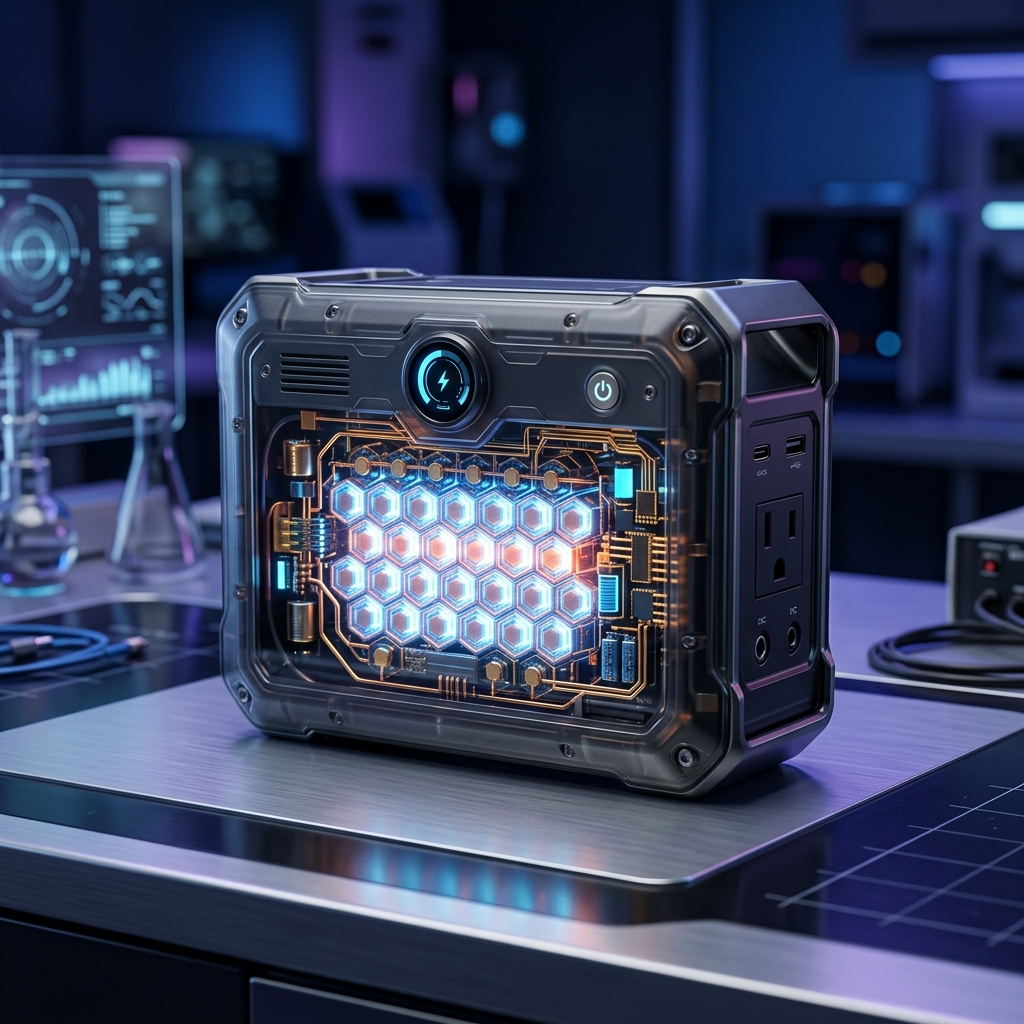
Direct answer: Compare solid-state battery chemistry against Lithium Iron Phosphate (LiFePO4) in portable power stations: gravimetric energy density, cold-weather charging, puncture safety, and cost per watt-hour.
Editorial note: WhichWatts is an independent comparison site. Prices, availability, specifications, and retailer promotions change frequently. Check the live product table and retailer page before buying.
Solid-State vs LiFePO4 Power Stations: Next-Gen Battery Tech, Safety & Cycle Life Explained (2026)
For the past five years, Lithium Iron Phosphate (LiFePO4 / LFP) has reigned as the undisputed king of portable power stations. Replacing older, volatile nickel-manganese-cobalt (NMC) cells, LiFePO4 brought 3,000+ cycle lifespans, structural thermal stability, and exceptional safety to consumer battery systems.
However, in 2026, a groundbreaking technological shift is reaching the consumer market: Solid-State and Semi-Solid State Lithium Batteries. Pioneered in consumer units by companies like Yoshino, DJI, and upcoming flagship ranges from EcoFlow and Bluetti, solid-state architecture promises lighter weights, compact form factors, near-impervious puncture safety, and reliable sub-zero charging.
Yet solid-state power stations carry a substantial price premium. Is the technology truly revolutionary for camping, off-grid travel, and home backup, or does mature LiFePO4 remain the smarter value purchase?
This technical guide breaks down the electro-chemistry, gravimetric energy densities, thermal runaway boundaries, and real-world cost-per-watt-hour metrics to help you make an informed decision in 2026.
┌──────────────────────────────────────────────┐       ┌──────────────────────────────────────────────┐
│           LiFePO4 (Liquid / Gel)             │  vs   │           Solid-State (Ceramic/Polymer)      │
├──────────────────────────────────────────────┤       ├──────────────────────────────────────────────┤
│ • Energy Density: 140–160 Wh/kg (Heavier)    │       │ • Energy Density: 260–320 Wh/kg (35% Lighter)│
│ • Thermal Limit: ~270°C (High safety)        │       │ • Thermal Limit: >400°C (Virtually Fireproof)│
│ • Sub-Zero Charge: Blocked below 0°C         │       │ • Sub-Zero Charge: Operates down to -10°C    │
│ • Mature Value: £0.35–£0.55 / Wh             │       │ • Early Adopter: £0.85–£1.30 / Wh            │
└──────────────────────────────────────────────┘       └──────────────────────────────────────────────┘
The Chemistry Behind the Breakthrough: Liquid vs Solid Electrolytes
To understand why solid-state batteries are capturing headlines, you must examine how lithium ions travel between the cathode and anode:
Traditional LiFePO4 (Liquid Electrolyte)
In standard LiFePO4 and ternary lithium batteries, the microscopic gap between the cathode and anode is filled with a porous polymer separator bathed in a liquid organic solvent electrolyte (typically ethylene carbonate with dissolved lithium hexafluorophosphate salts, $LiPF_6$):
- While LiFePO4 cathode material is inherently non-combustible compared to NMC, the liquid solvent remains flammable if heated past 200°C–270°C.
- Heavy structural casings, thermal runaway barriers, and liquid seals add significant weight and bulk to the finished power station.
- At sub-zero temperatures, the liquid solvent thickens, increasing internal ionic impedance and causing metallic lithium plating if charged below freezing.
Solid-State Architecture (Solid Electrolyte)
Solid-state batteries replace the volatile liquid solvent and plastic separator with a dense, non-flammable solid ceramic, polymer, or sulfide electrolyte barrier:
- Zero Liquid Flammability: There is no volatile organic solvent to leak, vaporize, or ignite under mechanical puncture, crush, or catastrophic overcharging.
- Dendrite Suppression: The rigid solid separator acts as a physical barrier that prevents microscopic lithium dendrite needles from puncturing through and creating internal short circuits.
- Higher Operating Voltages: Solid electrolytes tolerate advanced silicon-carbon composite or pure metallic lithium anodes, dramatically increasing the amount of energy stored per cubic centimeter.
The 5 Crucial Technical Comparisons
1. Gravimetric & Volumetric Energy Density (Weight & Size)
For campers, van lifers, and mobile tradespeople, weight is the single biggest drawback of modern LiFePO4 power stations. A 2,048Wh LiFePO4 unit typically weighs between 22 kg and 24 kg (48 to 53 lbs)—a heavy, cumbersome load to lift into a car boot or van overhead cabinet.
- LiFePO4 Cell Level: ~140 to 165 Wh/kg
- Solid-State Cell Level: 260 to 320+ Wh/kg
In practical terms, a solid-state power station can reduce total system weight by 30% to 40% and shrink total chassis volume by 25% to 35%:
- A 1,000Wh solid-state battery weighs around 7.5 kg (16.5 lbs) compared to 11.5 kg (25.3 lbs) for a comparable LiFePO4 unit.
- A 2,000Wh solid-state unit can be carried with one hand at 13.5 kg (30 lbs), transforming high-capacity off-grid power from a two-person team lift into a manageable single-handed carry.
2. Thermal Runaway Thresholds & Puncture Safety
Safety is the premier selling point of solid-state technology. While LiFePO4 is already vastly safer than older ternary lithium (which undergoes violent thermal runaway at ~150°C–180°C), solid-state pushes safety margins into aerospace territory:
| Chemistry | Thermal Runaway Onset Temperature | Flammability of Electrolyte | Nail Penetration / Puncture Response |
|---|---|---|---|
| Ternary Lithium (NMC / NCM) | 150°C – 180°C (302°F) | ❌ High (Violent jet flames & toxic fumes) | ❌ Catastrophic thermal runaway and explosion |
| LiFePO4 (LFP Liquid) | ~270°C (518°F) | ⚠️ Low to Moderate (Liquid solvent boils off) | ✅ No flame, minor smoking / swelling |
| Solid-State (Ceramic / Polymer) | > 400°C (752°F+) | ✅ Zero (Non-flammable solid electrolyte) | ✅ Zero fire, maintains voltage, minimal heat rise |
In certified nail-penetration tests, where a steel spike is driven completely through a fully charged cell, solid-state cells show virtually no thermal runaway propagation. This makes solid-state stations exceptionally attractive for indoor apartment storage, marine cabins, and close-quarters vehicle camping.
3. Sub-Zero Operating & Cold-Weather Charging
As covered in our winter solar and cold charging guide, traditional LiFePO4 batteries suffer from a strict physical limitation: you must never charge them below 0°C (32°F) without internal heating pads, or irreversible lithium plating will ruin the cells.
Solid-state electrolytes maintain stable ionic transport across much broader temperature extremes:
- Discharge Range: -25°C to +60°C (-13°F to 140°F).
- Sub-Zero Charging: Many next-gen solid-state cells can accept solar or AC charging down to -10°C or -15°C without dendrite growth, eliminating the need for energy-wasting internal pre-heating cycles on freezing winter mornings.
4. Cycle Life & Long-Term Durability
LiFePO4 remains the heavyweight endurance champion in proven cycle testing:
- LiFePO4: Commercial units routinely guarantee 3,500 to 6,000 full cycles to 80% remaining capacity. For daily off-grid cycling, that translates to 10 to 16 years of continuous service.
- Solid-State (1st & 2nd Generation): Current commercial solid-state power stations are rated between 2,500 and 4,000 cycles to 80% health.
While 3,000 cycles is more than enough for 99% of users (representing over 8 years of daily cycling or 30+ years of weekend camping), mature LiFePO4 still holds a slight edge in raw, proven cycle longevity.
5. The Economics: Cost per Watt-Hour in 2026
Where the comparison swings dramatically in favor of LiFePO4 is upfront financial cost:
| System / Chemistry | Average Price (1kWh Unit) | Average Price (2kWh Unit) | Cost per Watt-Hour (Wh) |
|---|---|---|---|
| LiFePO4 (LFP) Power Station | £450 – £650 ($500 – $750) | £900 – £1,300 ($1,000 – $1,450) | £0.35 – £0.55 / Wh |
| Solid-State Power Station | £850 – £1,200 ($950 – $1,350) | £1,800 – £2,400 ($2,000 – $2,700) | £0.85 – £1.25 / Wh |
Solid-state batteries currently command a 70% to 110% price premium per watt-hour over comparable LiFePO4 systems. You are paying heavily for weight savings, compact form factor, and bleeding-edge thermal resilience.
Technical Comparison Matrix
| Feature | LiFePO4 (LFP) | Solid-State | Winner |
|---|---|---|---|
| Weight for 2kWh Unit | 22 – 25 kg (48–55 lbs) | 13 – 16 kg (28–35 lbs) | 🏆 Solid-State (35% lighter) |
| Physical Dimensions | Standard / Bulkier | Ultra-Compact (-30% volume) | 🏆 Solid-State |
| Cycle Life to 80% | 3,500 to 6,000 cycles | 2,500 to 4,000 cycles | 🏆 LiFePO4 (Longer track record) |
| Thermal Runaway Limit | ~270°C | > 400°C | 🏆 Solid-State |
| Sub-Zero Charging | 0°C limit (Requires heating) | Down to -10°C / -15°C | 🏆 Solid-State |
| Cost per Watt-Hour | £0.35 – £0.55 / Wh | £0.85 – £1.25 / Wh | 🏆 LiFePO4 (Far better value) |
| Market Availability | 500+ models from top brands | Limited niche flagship models | 🏆 LiFePO4 |
Buying Verdict: Which Chemistry Should You Choose in 2026?
Buy a Solid-State Power Station If:
- Portability and weight are your non-negotiable priority: You hike, boat, camp, or carry gear solo where lifting a 23kg LiFePO4 block is unacceptable.
- You operate in extreme temperatures: You frequently camp or store gear in sub-zero winter environments and require instant charging without battery warm-up delays.
- You demand maximum thermal peace of mind: You keep power stations in small living spaces, boats, or vehicle cabins where flammable liquid electrolytes are a concern.
Stick with a LiFePO4 Power Station If:
- You want maximum value for money: LiFePO4 delivers twice the capacity and output per pound or dollar spent.
- Your application is stationary or home backup: For emergency blackout protection in a utility room or garage, extra weight is irrelevant.
- You need proven, decade-long cycle reliability: LiFePO4 has millions of field-tested operational hours and predictable long-term degradation curves.
Helpful Next Steps & Tools
- Compare real-time pricing and cost-per-watt-hour across all chemistries in our Live Price Comparison Table.
- Model your energy demands using our Power Station Sizing Calculator.
- Review high-value budget options in our Best Power Stations Under $500 guide.
FAQ
What is a solid-state portable power station?
A solid-state portable power station uses advanced battery cells where the traditional liquid chemical electrolyte is replaced with a solid ceramic, polymer, or sulfide material. This design eliminates volatile flammable solvents, increases energy density, shrinks physical dimensions, and significantly reduces unit weight.
Are solid-state batteries safer than LiFePO4?
Both chemistries are extremely safe compared to older NMC lithium cells. However, solid-state is technically the safest battery chemistry ever developed: its solid electrolyte cannot leak or vaporize, and its thermal runaway threshold exceeds 400°C (compared to ~270°C for LiFePO4). Under puncture or mechanical damage, solid-state cells do not ignite.
Why are solid-state power stations so expensive in 2026?
Solid-state manufacturing is still in its initial scaling phase. Synthesizing solid electrolyte separators with atomic-level uniformity requires specialized cleanroom environments, high-pressure roll-to-roll manufacturing, and expensive materials. As production yields scale over the next 3 to 5 years, price parity with LiFePO4 is expected to improve.
How much lighter is a solid-state power station compared to LiFePO4?
Solid-state power stations are typically 30% to 40% lighter for the same watt-hour capacity. A typical 2,000Wh LiFePO4 power station weighs approximately 22kg to 24kg (48–53 lbs), whereas a 2,000Wh solid-state power station weighs around 13.5kg to 15kg (30–33 lbs), making single-handed carrying feasible.