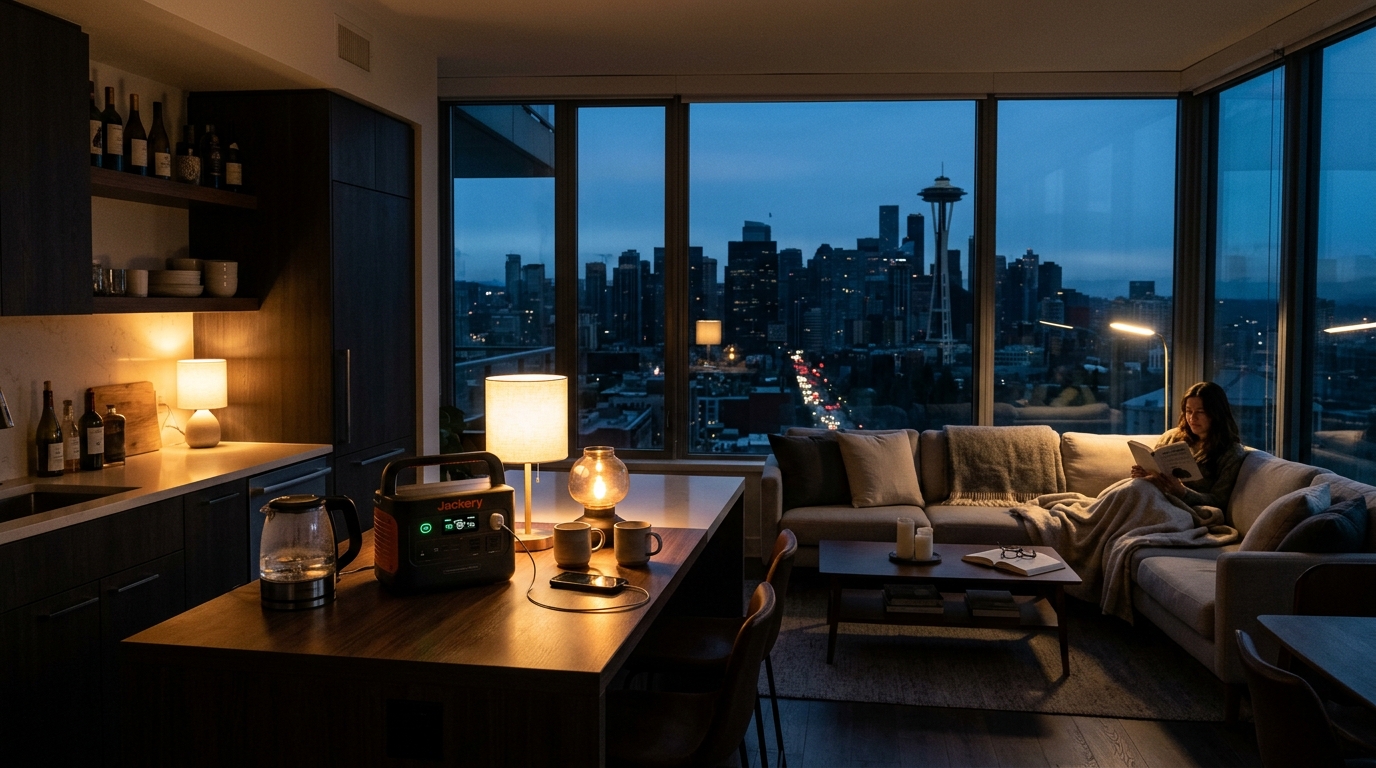
Direct answer: Living in a high-rise flat or rented apartment? Here is how to survive a multi-day power cut without petrol generators, zero wall drilling, whisper-quiet indoor battery backup, and safe indoor meal prep.
Editorial note: WhichWatts is an independent comparison site. Prices, availability, specifications, and retailer promotions change frequently. Check the live product table and retailer page before buying.
Emergency Preparedness for Renters & Apartments: The No-Drill, Zero-Petrol Blackout Blueprint
Emergency preparedness advice is almost universally written for suburban homeowners with large garages, private gardens, spacious basements, and roof space for solar panels.
If you live in a rented apartment, a high-rise flat, or a shared urban development, standard emergency advice is not just useless—it is often illegal or fatal:
- Petrol and diesel generators are strictly prohibited: Running an internal combustion engine on a balcony or indoors violates every building lease, fire safety ordinance, and building insurance policy in existence. Doing so will poison you and your neighbours with deadly, odorless carbon monoxide within minutes.
- You cannot modify electrical consumer units: Renters cannot hire an electrician to wire manual transfer switches or install dedicated subpanels without landlord permission and freeholder approval.
- You cannot drill holes in walls: Drilling through exterior cladding, brickwork, or double-glazed window frames for cables will forfeit your security deposit and breach damp warranties.
- High-rise infrastructure collapses first in blackouts: When grid electricity fails, apartment elevators immediately stop, communal fire stairwells go pitch black, and most critically, building booster water pumps stop running, cutting off tap water pressure to all floors above ground level.
Surviving an extended power cut in an apartment requires a fundamentally different playbook: the No-Drill, Zero-Petrol Urban Blueprint.
This guide reveals how apartment dwellers and tenants can achieve true 72-hour resilience using whisper-quiet portable battery stations, low-wattage electric cooking, gravity water filtration, no-drill window solar charging, and smart vertical prep tactics.
                    THE URBAN RENTER BLACKOUT SURVIVAL BLUEPRINT

┌─────────────────────────────────────────────────────────────────────────────┐
│ 1. NO-DRILL INDOOR POWER HUB                                                │
│    • 768Wh - 2,048Wh LiFePO4 Portable Power Station (0dB, Zero Emissions)   │
│    • Powers WiFi Router, Laptops, Fridge & Low-Wattage Cooking Safely       │
├─────────────────────────────────────────────────────────────────────────────┤
│ 2. SAFE FLUID & FLUIDLESS COOKING                                           │
│    • 600W-800W Induction Hotplate or 900W Mini Air Fryer                    │
│    • NO Butane / Gas Stoves Indoors (Eliminates CO & Fire Hazards)          │
├─────────────────────────────────────────────────────────────────────────────┤
│ 3. GRAVITY WATER & GRAVITY FLUSHING                                         │
│    • 15L - 25L BPA-Free Collapsible Water Cubes for Drinking                │
│    • Bathtub Water Bladder (WaterBOB) for Toilet Flushing when Pumps Die    │
├─────────────────────────────────────────────────────────────────────────────┤
│ 4. WINDOW & BALCONY RECHARGING                                              │
│    • 100W-200W Folding Solar Panel Hung from Balcony Railing                │
│    • 0.2mm Ultra-Flat MC4 Window Ribbon Cable (No Holes Drilled!)           │
└─────────────────────────────────────────────────────────────────────────────┘
1. The High-Rise Cascade Effect: What Actually Fails in Flats
When a storm, flood, or grid failure cuts electricity to an urban apartment block, problems compound far more rapidly than in a detached house:
- Water Booster Pumps Cut Out Immediately: Most apartment buildings higher than three storeys rely on electric variable-speed booster pump sets in the basement to push potable water up the risers. When power fails, water pressure drops to zero in kitchen taps and toilets within 30 to 60 minutes.
- Elevator Stranding: Elevators lock down. If you live on the 8th or 15th floor, every journey requires climbing dark fire stairwells. Hauling 20-litre water bottles or emergency supplies upstairs in the dark is exhausting and hazardous.
- Electronic Security & Intercom Failures: Magnetic door strikes, automated security gates, and video intercoms switch to short-lived backup batteries (which last 4 to 8 hours). Once depleted, communal doors may either fail-secure (locking you out) or fail-safe (allowing unrestricted public access into stairwells).
- Thermal Loss in High-Rise Units: Modern high-rises with extensive floor-to-ceiling glass envelopes lose heat rapidly during winter wind gales once communal heat networks (HIUs / heat interface units) or electric panel heaters lose power.
Understanding these vulnerabilities allows you to prepare specifically for the apartment environment.
2. Indoor Safe Power: Compact LiFePO4 Battery Stations
In an apartment, a portable power station is not an optional luxury—it is the single piece of hardware that keeps modern life functional.
Because battery stations use Lithium Iron Phosphate (LiFePO4) cells and high-frequency inverters, they produce:
- Zero carbon monoxide
- Zero nitrogen oxides or exhaust soot
- Zero flammable fuel storage risks
- Near-silent acoustic operation (under 35 dB)
Sizing for Apartments: Where Storage Space Is at a Premium
In an apartment, you cannot store an 80kg whole-home battery cabinet. You need high energy density in a compact footprint:
| Power Station Model | Capacity (Wh) | AC Continuous Output | Weight | Apartment Sweet Spot |
|---|---|---|---|---|
| Anker SOLIX C800 Plus | 768 Wh | 1,200W (Surge 1,600W) | 10.5 kg | Built-in magnetic camping lights on extendable poles; ideal for lighting dark living rooms. |
| EcoFlow DELTA 2 | 1,024 Wh | 1,800W (X-Boost 2,400W) | 12.0 kg | Best all-rounder; powers full-size apartment fridges, microwaves, and boils water in 50 minutes. |
| Bluetti AC70 | 768 Wh | 1,000W (Power lifting 2,000W) | 10.2 kg | Best budget workhorse; compact cube design easily stows under a kitchen island or desk. |
| EcoFlow River 2 Pro | 768 Wh | 800W (X-Boost 1,600W) | 7.8 kg | Ultra-lightweight grab-and-go unit; effortless to carry down 10 flights of stairs if evacuation is required. |
| EcoFlow DELTA 2 Max | 2,048 Wh | 2,400W pure sine wave | 23.0 kg | High-capacity choice for multi-day resilience; fits neatly in the base of a wardrobe or utility cupboard. |
3. Safe Indoor Cooking: Banishing Butane Camping Stoves
The most common emergency advice for meal prep during blackouts is: "Buy a cheap £20 portable butane camping burner."
In an apartment, this advice is dangerous:
- Carbon Monoxide & Oxygen Depletion: Burning butane or propane gas in a sealed modern apartment with double or triple glazing quickly exhausts room oxygen and generates carbon monoxide.
- Severe Fire Risk: Open flame gas canisters knocked over on laminate flooring or near synthetic curtains are a major cause of urban fires. Tenancy contracts explicitly ban open-flame cooking fuels indoors.
The Modern Electric Alternative:
Modern portable battery stations have high enough AC inverter limits (1,000W to 1,800W) to power clean, flame-free electric cooking appliances:
- Single-Burner Induction Hotplate (Set to 600W–800W):
- Induction transfers 85% to 90% of electrical energy directly into the steel pan base (compared to only 40% efficiency for gas).
- Heating soup or boiling pasta on an induction hob set to 600W takes 6 to 8 minutes, consuming a tiny 60 Wh to 80 Wh from your battery.
- Compact Mini Air Fryer (900W–1,200W):
- Cooking sausages, heating frozen meals, or toasting bread in a 2-litre mini air fryer takes 10 to 12 minutes. Total battery drain: ~150 Wh.
- Electric Multicooker / Instant Pot (Set to 'Saute' or 'Slow Cook' at 400W–700W):
- Retains thermal heat inside its insulated jacket, cooking stews or rice with minimal electrical throughput.
- Low-Wattage Travel Kettle (600W–800W):
- Boils 500ml of water for two mugs of coffee or freeze-dried noodles in 4 minutes, using just 40 Wh of power.
By combining low-wattage appliances with a 1,000Wh power station like the EcoFlow DELTA 2, you can cook warm, comforting hot meals for an entire weekend without a single open flame.
4. Apartment Water & Sanitation: When Booster Pumps Die
In an apartment block, water is your most urgent vulnerability:
Drinking Water (Purity First):
- Keep three 10-litre collapsible BPA-free water cubes stored flat in your storage cupboard. When severe gales or amber weather alerts are issued, fill them immediately at your kitchen tap before the grid fails.
- Keep a tabletop gravity water filter (such as a Brita filter paired with a Sawyer Mini or LifeStraw) to purify tap water if supply pressure drops and sediment backs up into building pipes.
Sanitation & Toilet Flushing (The Bathtub Strategy):
- A toilet flush requires 6 to 8 litres of water. In an apartment without tap pressure, your toilet will only flush once.
- The Bathtub Water Bladder (WaterBOB): A heavy-duty food-grade plastic bladder that fits inside your standard bathtub. Upon receiving an emergency warning, unfold it into your tub and attach the hose to the tap. It holds up to 380 litres (100 gallons) of clean, enclosed water, preventing tub grime or hair contamination.
- Use a simple plastic jug to scoop water from the tub into the toilet cistern to flush normally.
5. No-Drill Solar Recharging: Windows and Balconies
If a blackout extends into a second or third day, can an apartment tenant recharge their power station from the sun without angering the landlord?
Yes, through 100% non-invasive solar hardware:
[ Balcony Handrail ] ── Heavy-Duty Carabiners ──> [ 100W-200W Folding Solar Panel ]
                                                              │
                                                      Standard MC4 Cables
                                                              │
                                                              ▼
[ Patio Door Weatherstrip ] ── 0.2mm Ultra-Flat Ribbon ──> [ Living Room Inside ]
  (Door Closes & Locks Normally)                              │
                                                              ▼
                                                   [ Portable Power Station ]
- Folding Portable Solar Blankets (100W–200W): Units like the EcoFlow 160W/220W Bifacial or Anker 100W Solar Panel feature reinforced brass eyelets. Use heavy-duty mountaineering carabiners or nylon straps to securely suspend the panels from the interior face of your balcony railing.
- The 0.2mm Ultra-Flat Window Pass-Through Cable:
- A laminated flat copper ribbon cable less than 0.2mm thick.
- It sits across your patio door rubber sill.
- You close and lock your double-glazed sliding door or casement window directly over the cable without damaging the weather seal, cutting wires, or drilling holes.
- South-Facing Window Rest: If you do not have a balcony, rest a folding solar panel inside your living room window angled directly at the southern sun. While double glazing reflects 20% to 30% of solar irradiance, a 200W panel will still supply 80W to 120W of clean DC power, providing 300Wh to 500Wh of top-up energy every sunny afternoon.
6. Urban Communications, Lighting & Security Checklist
When municipal streetlights go dark, urban apartment buildings feel disorienting and cavernous. Prepare these simple upgrades:
1. Motion-Activated Magnetic LED Puck Lights:
- Place 3 or 4 magnetic rechargeable LED puck lights along your hallway skirting boards and bathroom doorframe.
- When you get out of bed in the dark, they illuminate your path automatically without fumbling for light switches or draining your main battery station.
2. Mesh Networking & Offline Comms:
- When mobile phone cell towers lose backup battery power after 4 to 8 hours, 4G/5G mobile data dies.
- Download offline messaging apps (like Bridgefy) that communicate device-to-device via Bluetooth mesh.
- Download offline maps for your entire city region on your smartphone.
3. Emergency Cash Reserve:
- Keep £100 to £200 in £5, £10, and £20 banknotes hidden in your flat.
- Nearby corner shops and small convenience stores may remain open during daylight hours but cannot process card transactions without electricity.
7. The Apartment Emergency "Go & Stay" Kit (Under £600 Total)
You do not need to spend thousands of pounds to achieve peace of mind. Here is a high-value budget blueprint for flat owners and renters:
| Essential Item | Purpose | Estimated Cost |
|---|---|---|
| Anker SOLIX C800 Plus or Bluetti AC70 | 768Wh LiFePO4 battery; powers WiFi, phones, fridge, induction cooking, and built-in lighting. | £399 – £499 |
| Single-Burner 800W Induction Plate | Safe flame-free hot meals and tea without gas canisters. | £25 – £35 |
| Two 15L Collapsible Water Cubes | 30 Litres of emergency drinking water. | £15 – £20 |
| Rechargeable LED Motion Sensor Lights (Pack of 3) | Automatic safe lighting for hallways and bathrooms. | £15 – £25 |
| Sawyer Mini / LifeStraw Water Filter | Purifies tap water during municipal boil-water advisories. | £25 – £30 |
| Ultra-Flat Window Solar Pass-Through Cable | Routes solar power inside without drilling frames. | £18 – £25 |
| Total Turnkey Renter Resilience Budget | Complete 72-Hour Protection | ~£497 to £634 |
Helpful Next Steps & Tools
- Calculate your apartment appliance runtimes with our interactive Power Station Sizing Calculator.
- Compare current battery prices, weight, and $/Wh metrics in our Live Price Comparison Table.
- Planning to install railing solar? Read our Balcony Solar Panel Railing & Wind Safety Guide.
- Review whole-home emergency tactics in our Prepping for Non-Preppers 72-Hour Blackout Guide.
Frequently Asked Questions
Can my landlord evict me or keep my deposit for having a portable power station?
No. A portable power station is classified as an ordinary household consumer appliance, exactly like a vacuum cleaner, a laptop, or an electric power tool battery. It requires no physical alterations to the property, produces zero emissions, and adheres to standard CE/UKCA electrical safety standards. It does not violate standard tenancy agreements.
What should I do if my apartment block loses tap water pressure?
Immediately close all taps to prevent accidental flooding when pressure restores. Use your pre-filled emergency water cubes for drinking and cooking. For sanitation, use greywater (such as pre-filled bathtub water or dish-rinsing water) poured directly into the toilet bowl to force a flush via siphon action, preserving your fresh drinking water strictly for hydration.
Can I run a full-size apartment fridge on a 768Wh or 1,000Wh battery station?
Yes. Modern apartment fridge-freezers draw an average of 60W to 90W when the compressor is active, cycling on for approximately 20 minutes each hour (average hourly consumption of ~25Wh to 35Wh). A 768Wh power station (like the Bluetti AC70 or Anker C800) will keep an apartment fridge cold for 18 to 24 hours continuously, or over 36 hours if you practice periodic duty cycling and keep the door closed.
How do I stay warm in an apartment without central heating during winter?
Close doors to unused rooms (bathrooms, hallways) and gather in a single central living room. Block drafty door sills with rolled-up towels. Instead of wasting battery energy attempting to power a 2,000W electric convection heater (which would drain a 1,000Wh battery in 30 minutes), plug a 45W electric heated blanket or heated vest into your power station. A 768Wh battery can run an electric blanket for over 14 continuous hours, keeping you toasty warm through freezing nights.