Direct answer: Choose between daytime plug-in solar and portable battery backup with a practical checklist, sizing tools, and comparison links.
Editorial note: WhichWatts is an independent comparison site. Prices, availability, specifications, and retailer promotions change frequently. Check the live product table and retailer page before buying.
Plug-In Solar vs a Portable Power Station: Which Fits Your Home?
Plug-in solar systems and portable power stations solve two fundamentally different energy challenges:
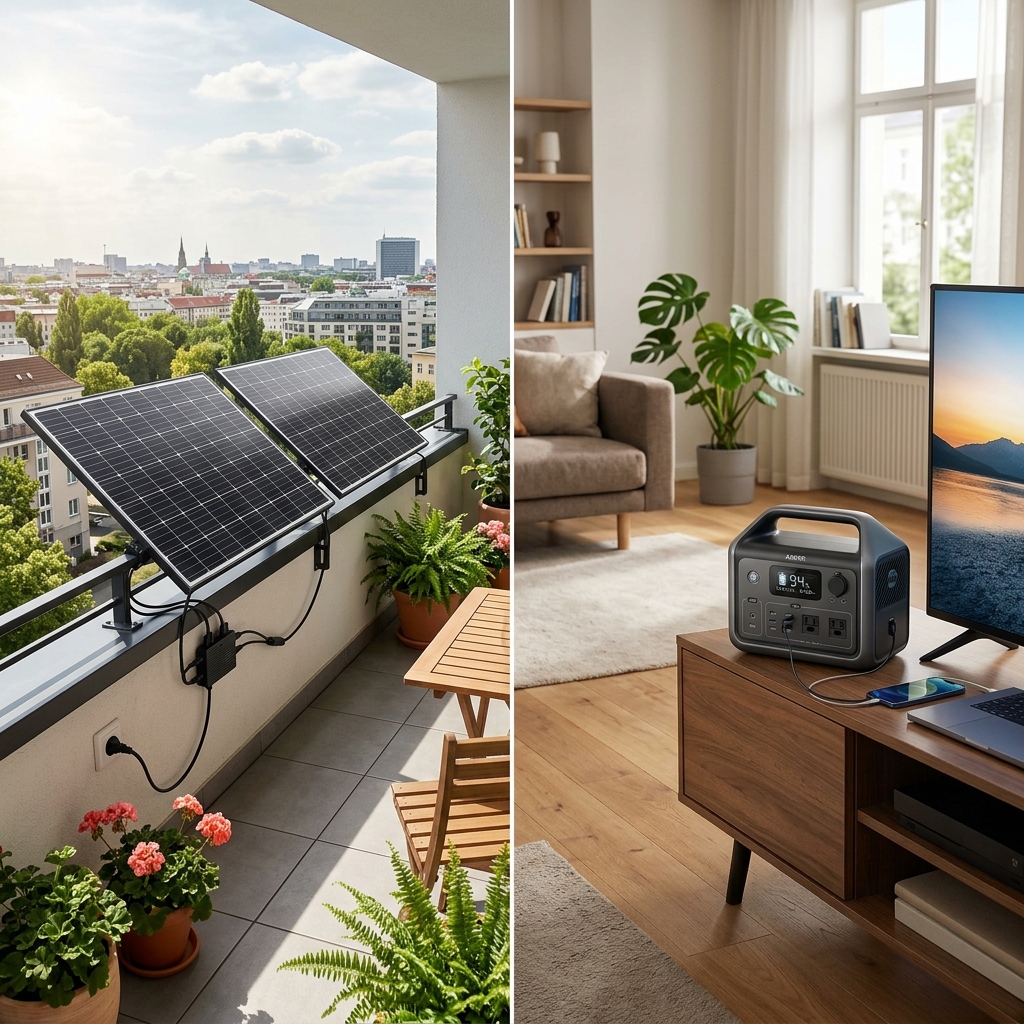
- Plug-In Solar (Balcony Solar): A small, grid-tied generator. Solar panels feed AC power directly into your home's ring main via a microinverter to offset your daytime electricity bill. It has no battery by default and shuts down during power cuts to protect grid workers.
- Portable Power Station: A standalone battery storage unit. It stores electricity from AC outlets, car ports, or solar panels and provides clean AC/DC power during outages, outdoor trips, or off-grid living.
Understanding this distinction ensures you invest in the right setup for your property and energy goals.
When to Choose Plug-In Solar
Plug-in solar is ideal when your primary objective is lowering your daily electric bill:
- Daytime Electricity Consumption: You work from home, run continuous appliances (aquariums, refrigerators, ventilation), or have steady daytime power needs.
- Accessible Sunlight: You have a south, east, or west-facing balcony, patio, roof terrace, or garden.
- 2026 UK Legal Compliance: In the UK, sub-800W plug-in solar kits operate under simplified G98 DNO notification rules—no certified installer, scaffolding, or prior grid permission needed.
⚡ Top Recommended Hybrid Systems
Modern systems combine plug-in solar generation with battery backup:
- • EcoFlow PowerStream System — 800W microinverter with Delta 2 / Delta Pro battery storage.
- • Anker Solix E1600 Solarbank — Weatherproof 1.6kWh LFP battery hub for balcony kits.
- • Bluetti AC200L Balcony Ecosystem — High-output power station with balcony solar input.
When to Choose a Portable Power Station
A portable power station is the superior choice when runtime security and mobility matter:
- Emergency Outage Backup: Keeps refrigerators, medical equipment, lights, and Wi-Fi running during grid blackouts.
- Off-Grid Mobility: Powers camping trips, campervans, motorhomes, and outdoor DIY work.
- Zero Grid Paperwork: No DNO notification or meter checks required.
Decision Matrix: Plug-In Solar vs Portable Power Station
| Feature / Need | Plug-In Solar Kit (Sub-800W) | Portable Power Station | Hybrid Plug-In Solar + Battery |
|---|---|---|---|
| Primary Benefit | Lower electricity bills | Emergency backup & mobility | Bill savings + outage protection |
| Battery Storage | None (Grid direct) | 500Wh – 6,000Wh+ | 1,000Wh – 6,000Wh+ |
| Works During Power Cuts? | No (Grid anti-islanding) | Yes (Independent inverter) | Yes (Via battery outlets) |
| UK Installation Rules | Sub-800W G98 DNO Notification | None (Plug into devices) | Sub-800W G98 DNO Notification |
| Typical Cost | £350 – £700 | £400 – £2,000 | £900 – £2,200 |
Related Deep-Dive Guides
- UK Plug-In Solar Laws Explained (2026): G98 Rules & 800W Limits
- What the New UK Solar Laws Mean for Renters & Flat Owners
- Step-by-Step UK Plug-In Solar Setup & Top System Comparison
- Power Station Runtime Calculator
Turn the decision into a shortlist
Use your primary goal to choose the next buying step:
- Daytime bill reduction: confirm the local connection and mounting rules, then request a compliant plug-in solar proposal based on your measured daytime load.
- Outage backup: calculate the watt-hours and startup surge of the devices you must keep running, then shortlist a portable power station with enough inverter headroom.
- Both: price the two functions separately. Plug-in solar can generate during the day, while a battery can store energy and cover selected loads after dark or during an outage.
For the battery route, begin with the power station sizing calculator, review suitable capacity and output in the price comparison table, and use side-by-side comparison before checking the exact manufacturer warranty and specifications. That sequence keeps the purchase tied to your real load instead of a headline watt-hour number.
Ready to choose?
Save your answers to three questions—what must run, when it runs, and what happens during an outage. If the answers point to portable backup, browse the current power-station range. If they point to grid-connected generation, use the checklist above with a qualified local provider and confirm permission before ordering.