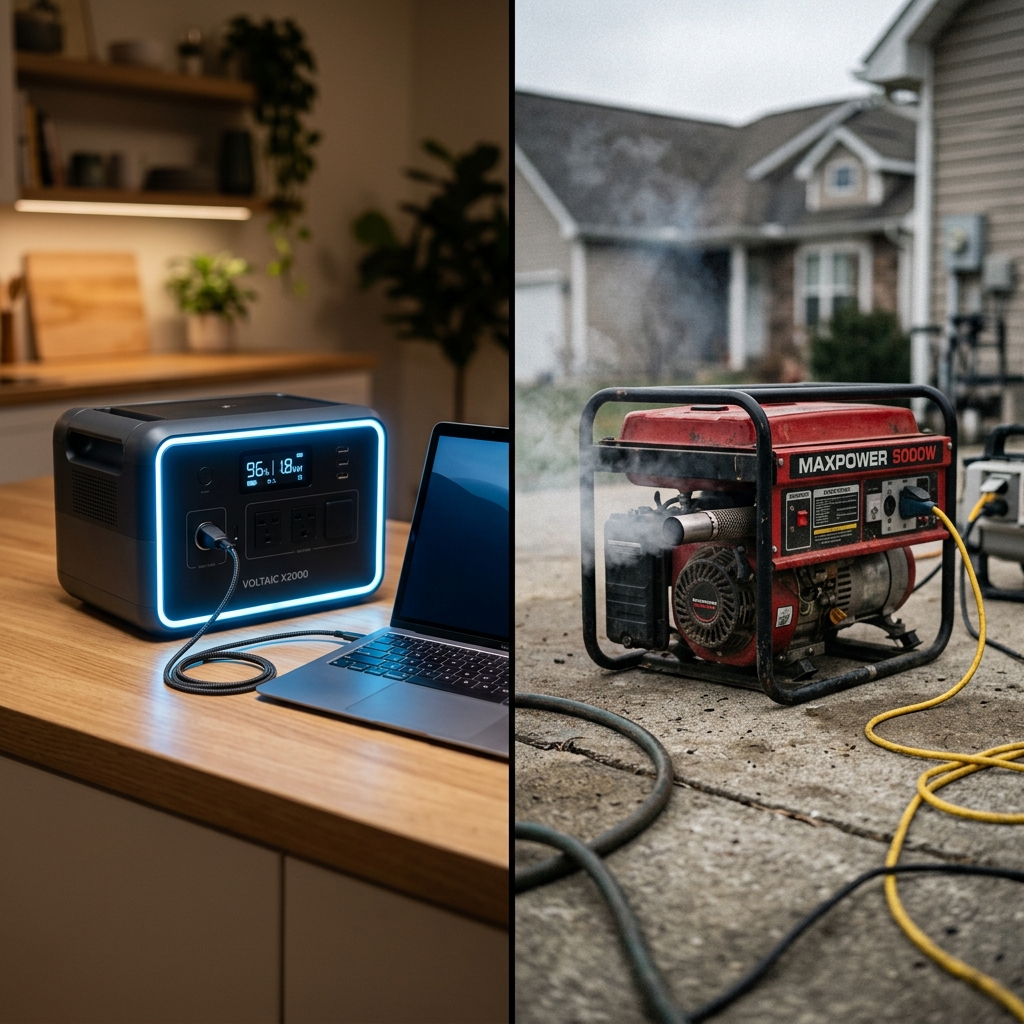
Direct answer: Most buyers compare three types of power stations: portable battery stations, solar generators, and whole-home or expandable battery systems, with fuel generators as a fourth category. Here is how each works and which one fits your use.
Editorial note: WhichWatts is an independent comparison site. Prices, availability, specifications, and retailer promotions change frequently. Check the live product table and retailer page before buying.
Types of Power Stations: Portable, Whole-Home, Solar Generators, and More
Most shoppers can group power stations into three main types: compact portable battery stations, solar generators (a battery station plus panels), and larger whole-home or expandable battery systems. A fourth category, the traditional fuel generator, still matters as a comparison point. Choosing the right type starts with whether you need portable energy, off-grid solar recharging, or fixed home backup.
The three main types of power stations
- Portable battery power station. A rechargeable battery with an inverter, AC outlets, USB and 12V ports in one carryable box. Best for camping, tailgating, and short outages. Typical use: phones, lights, laptops, and small appliances.
- Solar generator. A portable battery station paired with compatible solar panels. The generator name refers to the system, not a combustion engine. Best for off-grid trips and daytime recharging without fuel.
- Whole-home or expandable battery system. Larger, often modular battery and inverter systems that can back up essential circuits, sometimes with a transfer switch or home integration. Best for multi-day outages and fixed installations.
A fourth option, the fuel generator, produces power by burning gasoline, propane, or diesel and must be operated outdoors with ventilation because of exhaust and carbon-monoxide risk. Compare it with battery systems on runtime, fuel availability, noise, and indoor-use rules.
A quick comparison
- Portability: portable battery, then solar generator, then whole-home system, then fuel generator.
- Indoor use: battery systems can often be used indoors when the manufacturer permits; fuel generators cannot.
- Refueling: battery systems recharge from AC or solar; generators need fuel.
- Runtime without resupply: a generator runs as long as you add fuel, while a battery needs a recharge path.
- Noise and fumes: battery systems are quiet and fume-free at the point of use.
The DOE's solar and storage basics explains the capacity-versus-power distinction that applies to all of these categories.
How to choose between them
- List the devices you must run and their watts, hours of use, and startup surge.
- Estimate daily watt-hours with the power station sizing calculator.
- Decide whether you need portable convenience, solar recharging, or fixed home backup.
- Filter current models in the price comparison chart, then verify chemistry, warranty, and service terms.
If you are leaning toward fixed backup, the best power stations for home backup list is the practical next step.
FAQ
What are the three types of power stations?
The three types most buyers compare are portable battery power stations, solar generators (a battery station with solar panels), and whole-home or expandable battery systems. Fuel generators are a separate, combustion-powered category.
What is the difference between a power station and a solar generator?
A solar generator is a portable battery power station used together with compatible solar panels. The station stores the energy; the panels recharge it from sunlight.
Which type of power station is best for home backup?
For essential-circuit backup, a high-capacity or expandable battery system is usually the best fit. Size it from your measured essential loads and check whether professional installation or a transfer switch is required.