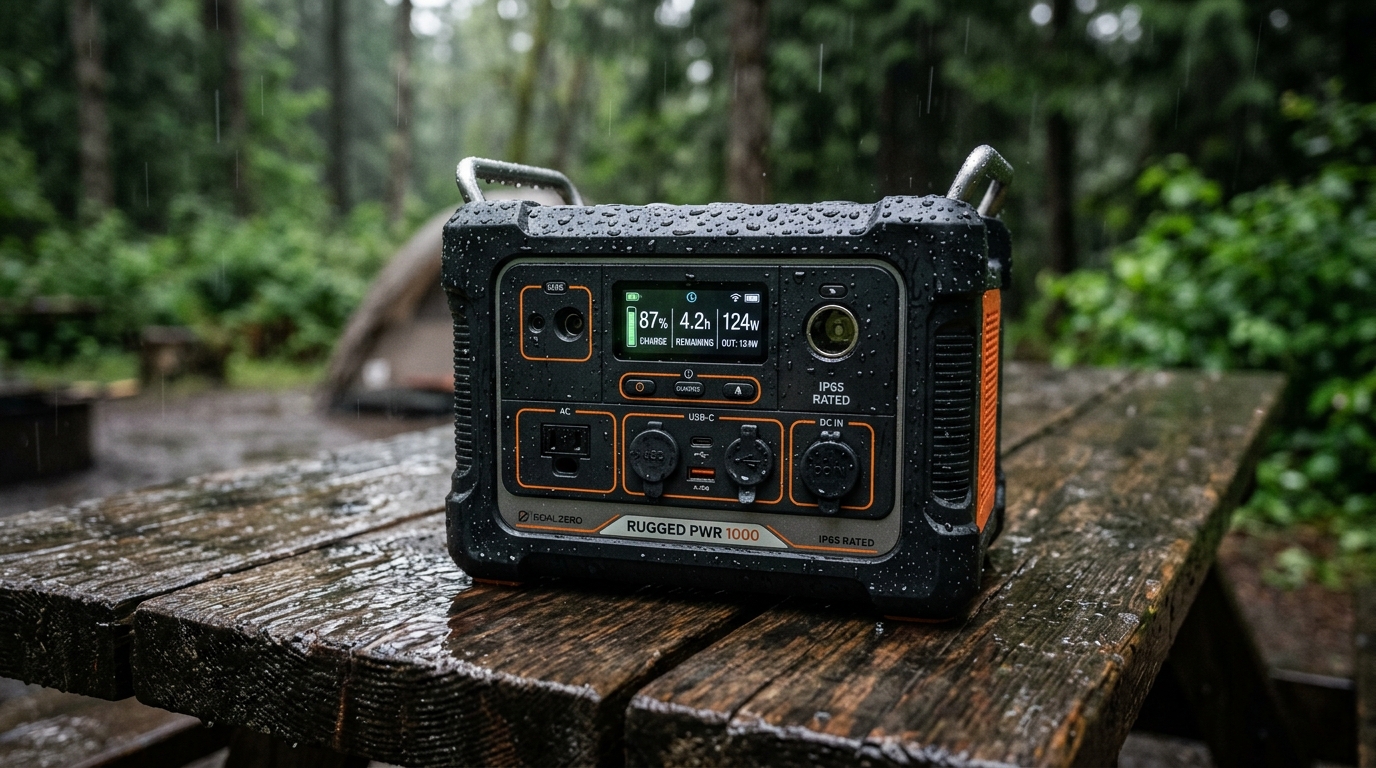
Direct answer: Understand IP ratings, what waterproof really means for a power station, and how to verify weather claims before buying.
Editorial note: WhichWatts is an independent comparison site. Prices, availability, specifications, and retailer promotions change frequently. Check the live product table and retailer page before buying.
Waterproof Power Stations: What an IP65 Rating Does and Does Not Mean
An IP65 rating means the enclosure is dust-tight and protected against low-pressure water jets, but it is not the same as being waterproof in every condition. The rating applies to the housing as tested, not necessarily to an open AC socket, a connected cable, or a unit being charged in the rain. Reading the two digits correctly is the only way to avoid a costly misunderstanding.
Read the two digits separately
| Rating | What it means | What it does not mean |
|---|---|---|
| IP65 | Dust-tight plus protection from water jets | Not rated for immersion |
| IP67 | Dust-tight plus immersion to 1 metre for a limited time | Not a guarantee for every port and cable |
| IP68 | Dust-tight plus immersion beyond 1 metre, with depth and time stated | Conditions vary by manufacturer |
| IPX4 | Splash protection from any direction | No dust rating and not jet-proof |
The first digit covers solids and the second covers liquids. A housing rated for water does not override the operating manual, which may require port covers, a specific orientation, or dry conditions during charging.
How to verify a weather claim
- Ask which part of the product carries the rating, and read the test conditions and any exclusions in the documentation.
- Check whether ports must be sealed, and whether outdoor charging is permitted or only storage in the weather.
- Confirm the temperature range, condensation behaviour, and whether the battery chemistry is rated for the climate you face.
- Treat unverified marketplace claims with caution and prefer documented certifications from a traceable manufacturer.
- Keep connections dry and use covers as instructed; even an IP65 unit should not be submerged or left permanently exposed.
The open-port loophole
Many power stations carry a rating for the main enclosure while the ports and fans are a different story. A station sitting in the rain with a cable plugged into an open socket can fail even when the box itself is genuinely IP65. Before you buy, ask what happens when the unit is being used, not just what happens when it is closed and sealed on a shelf.
Bottom line
Compare current outdoor models in the price comparison chart and confirm the exact IP rating, port rules, and warranty on the manufacturer page before buying. Use the sizing calculator to make sure the capacity and output fit the trip, because weather protection only matters if the station can actually run your loads.