Direct answer: Running power 1,000 feet costs far more than a short run because voltage drop forces a thicker wire gauge, and trenching, conduit, and labor add up. This guide explains the cost drivers and when a portable power station is the cheaper alternative.
Editorial note: WhichWatts is an independent comparison site. Prices, availability, specifications, and retailer promotions change frequently. Check the live product table and retailer page before buying.
Cost to Run Power 1,000 Feet
The cost to run power 1,000 feet is driven by three things: the wire gauge required to keep voltage drop within safe limits, the materials (conduit, trenching, panels, breakers), and local labor rates. There is no single price, but the key insight is that distance usually forces you into thicker, more expensive copper or aluminum than a short run would need.
Why distance increases cost
Voltage drop is the drop in voltage between the source and the load as current travels through the wire. Over a long run, undersized wire wastes energy, causes equipment to run poorly, and can become a safety hazard. The longer the run and the higher the current, the thicker the conductor must be to stay within acceptable voltage drop.
Because wire thickness is one of the biggest cost multipliers, a 1,000-foot run can cost several times more than a 100-foot run for the same load, sometimes making a local battery or generator the more economical choice.
What drives the total price
- Conductor size and material: copper costs more than aluminum but carries more current per size; long runs push you up in gauge.
- Voltage and load: a 120V run carrying a heavy load needs thicker wire than a light 240V feeder.
- Conduit, cable type, and burial depth: underground runs need rated cable or conduit, trenching, and backfill.
- Labor and permits: licensed electrical work, inspections, and utility or code requirements vary widely by location.
Always have a licensed electrician size the circuit and quote the job. Treat any online cost figure as a starting estimate, not a fixed price. The National Electrical Code and local amendments govern conductor sizing and installation, so a local professional is the only reliable source for your exact situation.
When a power station is the cheaper answer
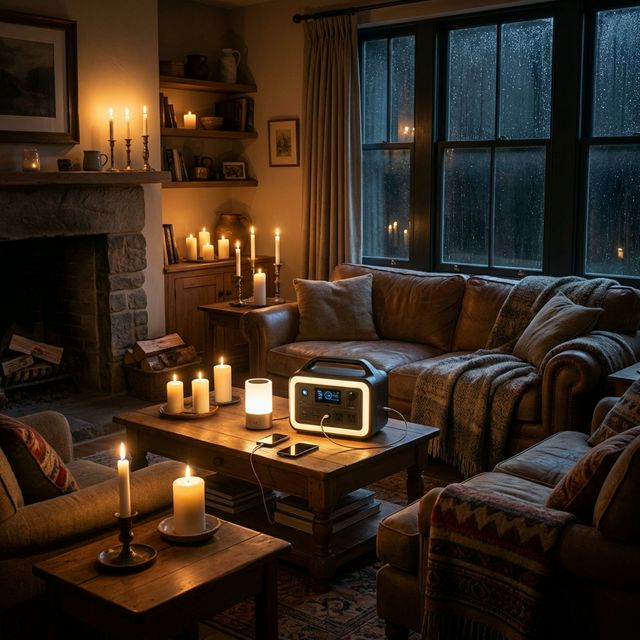
If the goal is a single outlet, a shed light, a gate opener, or occasional tool use far from the house, a portable power station can be far cheaper than a 1,000-foot line. It avoids trenching and permits entirely, and it recharges from AC or solar.
- Add the actual load to the power station sizing calculator to see the watt-hours and inverter output you need.
- If the site gets sun, check panel requirements with the solar calculator.
- Compare that total with an electrician's quote for the permanent line before committing to either path.
For a permanent line to a dwelling or workshop, there is no substitute for a licensed, inspected installation. Portable power is a practical alternative for light, intermittent loads, not a way to wire a building.
FAQ
How much does it cost to run power 1,000 feet?
It depends on wire gauge, voltage, load, trenching, and local labor, so prices vary widely. The main point is that long runs require thicker conductor and often cost several times more than a short run. Get a local electrician's quote for your exact circuit.
What size wire do I need for 1,000 feet?
Wire size depends on voltage, current, and acceptable voltage drop, and must be sized by a licensed electrician to the National Electrical Code and local rules. Do not guess from an online chart alone.
Is a portable power station cheaper than running a power line?
For light, intermittent loads such as a shed light or gate opener, a portable power station often avoids trenching and permits and can be cheaper. For continuous or heavy loads, a properly installed permanent line is usually required.