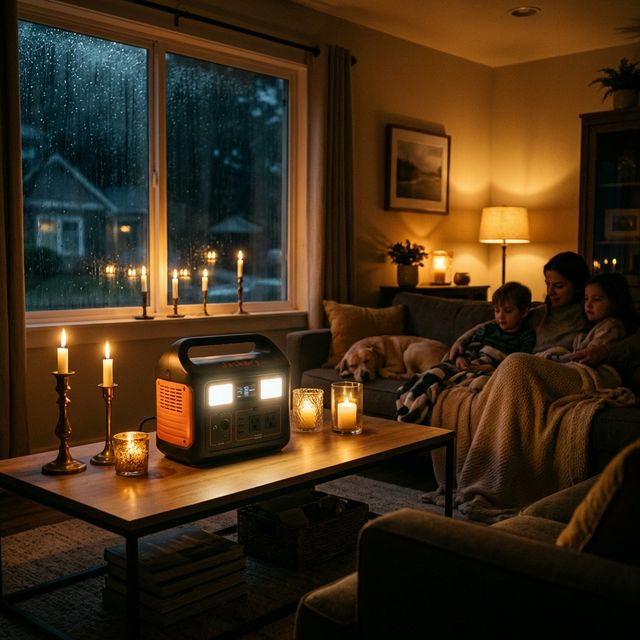
Direct answer: The largest portable power station depends on what you are measuring: single-unit battery capacity, continuous AC output, or the size of an expandable system. Here is how to compare high-capacity systems for whole-home backup, RVs, and off-grid use.
Editorial note: WhichWatts is an independent comparison site. Prices, availability, specifications, and retailer promotions change frequently. Check the live product table and retailer page before buying.
The Largest Portable Power Stations: High-Capacity Systems Explained
When shoppers search for the largest portable power station, they usually mean one of three different things: the biggest single-unit battery capacity, the highest continuous AC output, or the largest expandable system you can build by stacking extra batteries. Each leads to a different shortlist, so start by deciding which one actually matters for your use.
Decide what largest means for you
- Biggest single-unit capacity: the energy stored in one box, usually measured in watt-hours (Wh). Compact camping units sit around 300-1,000Wh, while large portable units commonly span 2,000Wh to 3,600Wh and beyond.
- Highest continuous output: the AC watts the inverter can sustain. A large battery is not useful if the inverter cannot start your fridge, well pump, or power tools.
- Largest expandable system: the total capacity after connecting approved expansion batteries. Some systems scale from a few kilowatt-hours to 25kWh or more, which changes the product from a portable unit into a semi-permanent home-backup system.
Do not buy the biggest spec sheet unless it fits your loads. A lighter 2kWh unit may beat a heavy 5kWh unit for camping, while a 5kWh-plus expandable stack may be the better fit for multi-day home outages.
Compare the right fields, not just watt-hours
- Usable capacity vs advertised capacity: advertised watt-hours are not the energy delivered at the AC outlets after inverter losses, temperature, and battery age.
- Continuous and surge output: check the inverter rating against the largest motor you need to start.
- Expansion path: confirm which extra batteries, cables, and firmware versions are supported, and whether the maximum capacity includes the base unit.
- Solar input: a huge battery is less useful off-grid if its solar input ceiling is small or if the array voltage exceeds its limit.
- Weight, wheels, and service terms: very large units are heavy; check handles, wheels, storage temperature, warranty, and the service route before committing.
The DOE explains the difference between stored energy and instantaneous power in its solar and storage basics page. Use the price comparison chart to sort current high-capacity models by cost per watt-hour, then confirm the exact specification on the manufacturer page.
Portable, RV, and whole-home fit
- Camping and day trips: prioritize weight and portability over raw capacity.
- RV and van life: match daily energy use plus the 12V and solar-input limits of your build.
- Home backup: size for the essential circuits you must keep running, not the whole house, unless you are installing panel-connected equipment with professional guidance.
If expandability is the deciding factor, read the expandable power station guide. For a first estimate, enter your essential devices in the power station sizing calculator. If you are pairing the station with panels, use the solar calculator to check how much array you need to refill it.
FAQ
What is the largest portable power station you can buy?
It depends on the definition. Single-unit portable stations commonly reach several thousand watt-hours, while expandable systems can be stacked with extra batteries into double-digit kilowatt-hour configurations. Compare current models in the live comparison table and confirm the exact specification with the manufacturer.
Is a larger power station always better?
No. A larger station is only better when its capacity, continuous output, weight, and recharge plan match your loads. A lighter unit can be the right choice for camping, while a large expandable system makes more sense for multi-day home backup.
Can a portable power station power a whole house?
Do not infer whole-house capability from battery capacity alone. Panel-connected backup requires compatible equipment, load planning, correct installation, and compliance with manufacturer and local electrical guidance. Size for essential circuits first.
How heavy are large power stations?
High-capacity units are typically too heavy to carry far and often use wheels and handles. Check the listed weight and dimensions, and treat very large systems as semi-stationary.