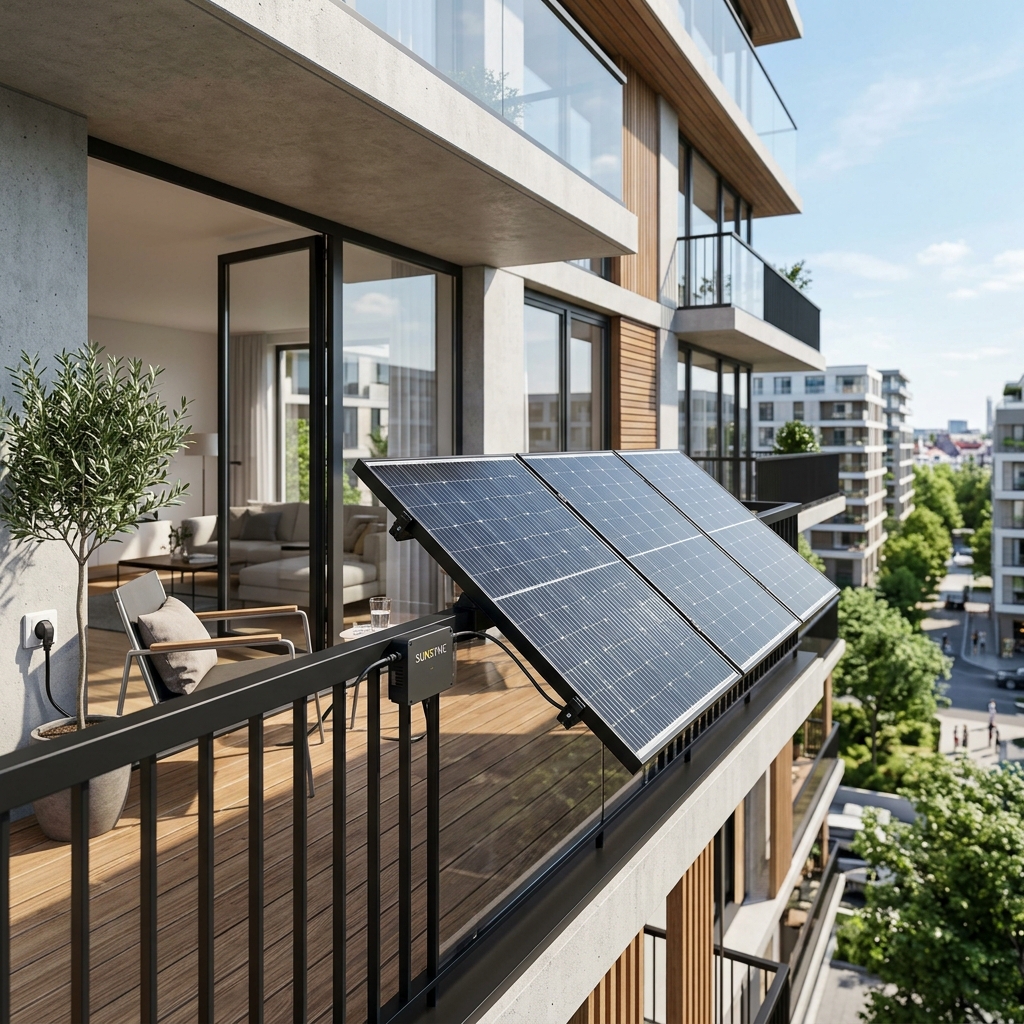
Direct answer: Learn whether plug-in solar fits your home, what to verify before buying, 2026 UK 800W G98 rules, and when a portable power station is the better choice.
Editorial note: WhichWatts is an independent comparison site. Prices, availability, specifications, and retailer promotions change frequently. Check the live product table and retailer page before buying.
Plug-In Solar Explained: How It Works and What to Check
Plug-in solar (also referred to as balcony solar or plug-and-play microgenerators) is a compact solar power system designed to feed electricity directly into your home's standard wall sockets. Unlike a portable power station, it operates grid-tied without needing a battery: panels generate DC power, a microinverter converts it to grid-synchronized 230V AC electricity, and local appliances consume the generated power immediately to reduce your utility bills.
Under updated UK regulations (BS 7671 and ENA Engineering Recommendation G98), sub-800W plug-in solar systems are legally recognized for consumer installation via standard 13A outdoor sockets, provided the microinverter features certified anti-islanding protection.
How the Microinverter Works
The microinverter is the intelligence behind plug-in solar. It converts low-voltage DC power from your panels into 230V AC grid electricity while continuously monitoring grid voltage and frequency:
- Grid Synchronization: Matches the phase and frequency of your electricity provider.
- Anti-Islanding Safety (BS EN 50549-1): If local grid power drops out, the microinverter automatically shuts down within 20 milliseconds. This prevents dangerous voltage from backfeeding into local power lines while utility engineers carry out repairs.
- Dynamic Output Control: Premium systems (such as the EcoFlow PowerStream or Anker Solix Solarbank) use smart plugs to match generation with real-time home demand, routing excess watts into battery storage.
Safety & Legal Checklist Before Buying
- Verify Inverter Certification: Ensure the microinverter carries CE/UKCA marking and is listed on the ENA Type Test Register for G98 compliance.
- Socket Safety: Connect only to a 30mA RCD-protected, IP66 weather-rated outdoor socket. Never use indoor extension leads or unrated multi-plug adapters outdoors.
- Submit Free DNO G98 Form: In the UK, notify your regional Distribution Network Operator (DNO) online within 28 days of plugging in your kit. No prior approval or MCS installer is required for sub-800W systems.
- Check Smart Meter Compatibility: Upgrade to a free SMETS2 smart meter if you have an older analog meter to prevent unrecorded reverse metering.
- Mounting Integrity: Ensure balcony rail clamps or garden stands are wind-rated and non-destructive for leased properties.
📖 Read Our Complete 2026 UK Plug-In Solar Guides
Plug-In Solar vs Battery Storage: Choosing the Right Path
Plug-in solar cuts daytime electricity bills but does not store energy for the evening or run devices during blackouts.
- Choose Plug-In Solar if your primary goal is offsetting daytime background electricity loads (refrigerators, routers, home offices).
- Choose a Portable Power Station if you need emergency outage backup, camping power, or evening energy storage.
- Combine Both by pairing an 800W balcony solar kit with an expandable battery unit like the EcoFlow PowerStream Delta 2 Max or Bluetti AC200L Balcony Hub.